

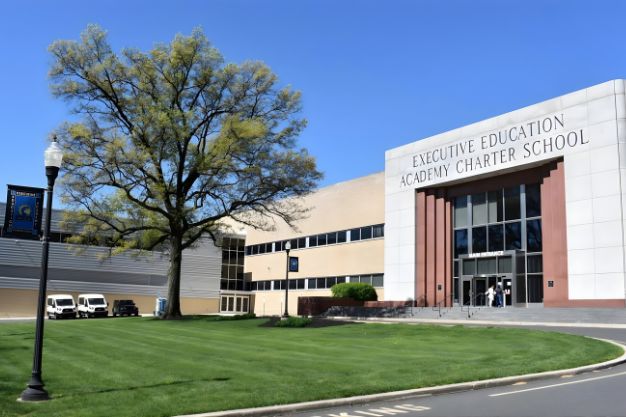
Client: Executive Education Academy Charter School
Industry: Education
The Organization
Executive Education Academy Charter School (EEACS), located in Allentown, Pennsylvania, was established with a compelling mission: to provide a high-quality, public K–12 education designed to prepare students, many from underserved communities, for success in college, careers, and life. As EEACS’s outcomes gained recognition, demand for enrollment increased significantly. Families sought a school environment that was safe and provided an innovative school model. Faced with this opportunity to expand, EEACS recognized that growth would require more than physical space and additional staff, it necessitated a comprehensive and strategic approach.
Problem
EEACS aspired to grow by expanding from a limited grade offering to a full K–12 program while increasing enrollment to over 1,500 students. However, scaling a school of this nature presented multiple complex challenges:
- Ensuring instructional consistency while adding new grade levels
- Managing rapid enrollment growth without compromising quality
- Building and maintaining trust with the community to support sustainable growth
As the expansion plans took shape, it became evident that achieving these goals required strong internal alignment, deliberate leadership development, and organizational alignment.

Solution
To navigate these challenges, EEACS worked with Grid International, a leader in organizational culture transformation, to support its growth strategy. Grid International applied proven methodologies designed to strengthen leadership, align teams, and foster a values-driven culture that is conducive to sustainable growth and expansion.
- Building Unified Leadership: Grid International collaborated with EEACS to develop a cohesive leadership team that could effectively manage growth. This approach ensured that each stage of expansion was intentional, well-structured, and aligned with the school’s core mission and values.
- Managing Enrollment at Scale: With leadership alignment established, EEACS integrated operational planning for large-scale enrollment increases. This included strategic planning around classroom capacity, staff recruitment, and the enhancement of student support services—all designed to maintain high-quality outcomes despite rapid growth.
- Strengthening Culture and Building Community Trust: Recognizing the critical role of community engagement, Grid facilitated the development of a strong, values-driven culture. This cultural foundation spurred positive word-of-mouth and cultivated partnerships with local organizations, essential to ongoing enrollment growth.
Responsibilities
Results
With help from Grid International, EEACS successfully expanded to a full K–12 program within four years, underpinned by an aligned and purpose-driven leadership team. EEACS also increased enrollment to over 1,500 students, establishing itself as one of the largest and most respected charter schools in the region. Furthermore, it built and sustained a collaborative, high-performing organizational culture resilient to the challenges of rapid growth. All while earning the trust of the community, ensuring that families not only enrolled but remained engaged and supportive.
Responsibilities
Conclusion
Executive Education Academy Charter School’s journey underscores the importance of leadership, culture, and community in driving effective and sustainable growth. With Grid International’s support, EEACS has become a model for scaling educational institutions without sacrificing mission or quality. Today, EEACS stands as a community pillar and of excellence, demonstrating that when internal alignment meets external opportunity, transformative outcomes are achievable.


